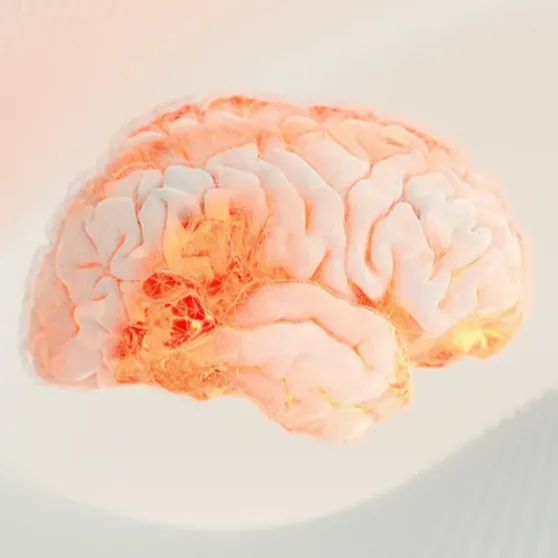
How Gut Health Shapes Your Child's Brain Development
The gut-brain science shaping early development, and why the first years matter more than we ever realised.
Written by Nicole·Founder, Physically Primal
We were taught to think of the gut as a digestion machine. Food goes in, nutrients are absorbed, waste comes out. That model is decades out of date, and for children, it misses the most important thing the gut is doing.
In the earliest years of life, your child's gut is not just feeding their brain. It is helping to build it.
The molecules that shape a developing brain
When the bacteria in your child's gut ferment dietary fibre, they produce a family of compounds called short-chain fatty acids: chiefly butyrate, acetate and propionate. These are not waste products. They are signalling molecules, and their reach extends far beyond the gut wall.
Short-chain fatty acids cross the blood-brain barrier. Butyrate in particular acts as a histone deacetylase inhibitor, which means it directly influences which genes are switched on and off during development. These molecules help regulate the maturation of microglia (the brain's resident immune cells), support the integrity of the blood-brain barrier itself, and contribute to myelination, neuroplasticity and the day-to-day chemistry of a growing brain.
In other words, the microbial environment in the gut is quietly setting the terms for how the brain gets built. And the window in which this matters most, roughly the first thousand days, from conception through the first two years, is precisely the window in which the brain is most dependent on getting it right.
The gut isn't downstream of the brain. In early life, it's upstream of it.
What I see in the clinic
This is not abstract science to me. I run functional testing on very young children, sometimes only a couple of months old, and I repeatedly see short-chain fatty acid levels coming in well under what that stage of development requires.
A two-month-old gut is still colonising, still immature, and of course levels will be lower than an adult's. That is expected. But there is a developmental trajectory these markers should be following, and when an infant comes in well below even that, it tells me the foundational microbial ecosystem isn't establishing the way it should. And if the ecosystem isn't establishing, then every downstream process that depends on it (barrier integrity, vagal signalling, the epigenetic regulation these molecules drive) is potentially compromised during the exact window the brain can least afford it.
This is the argument for testing early rather than waiting. "Wait and see" assumes nothing is happening. The first years are when the most is happening.
Why this matters for neurodivergent children
When researchers look at the gut profiles of children with neurodevelopmental differences, a pattern keeps surfacing. Studies have repeatedly found altered short-chain fatty acid profiles, often lower butyrate and acetate, alongside depleted populations of the beneficial bacteria that produce them, such as Faecalibacterium prausnitzii.
These are associations, not a single cause. Neurodivergence is multifactorial, and I will always say so. But the signal is consistent enough, and the mechanism robust enough, that it cannot be waved away. The gut environment is part of the picture.
Why we always start with the gut
This is the reasoning behind the sequence at the heart of my methodology. Before we do the neurological work, before primitive reflex integration, before we ask a child's nervous system to reorganise and mature, we address the gut and the inflammation driving the system.
The gut isn't downstream of the brain. In early life, it's upstream of it.
That phrase isn't a slogan. It's a physiological reality. A brain that is inflamed, poorly fuelled and receiving disrupted signals from the gut is not in a state to do the hard work of neurological change. Calm the terrain first, and everything that follows works better.
What this means for you
You don't need a laboratory to start supporting this. The single most powerful thing you can do for your child's microbiome is to feed it diversity: a wide range of plant fibres from vegetables, fruits, legumes, nuts and seeds. Different fibres feed different bacteria, and it is that diversity that drives short-chain fatty acid production.
Aim for variety over perfection. The goal is many different plants across a week, not a flawless daily menu.
Be thoughtful about what depletes the microbiome, too: unnecessary antibiotics, ultra-processed food, and chronic stress all work against you.
And when something isn't adding up developmentally, test rather than assume. Guessing at a child's gut is guessing at their brain.
Because in the end, that is the principle everything here rests on: don't treat what you don't test.
This is what Beyond the Diagnosis™ means in practice. A label tells you what a child's differences are called. It doesn't tell you why. The gut-brain story is one of the most powerful "whys" we have, and unlike a diagnosis, it's something we can actually work with.
Looking for answers beyond the diagnosis?
At Physically Primal, we use a systems-based approach to understand what's driving your child's health concerns, not just manage the symptoms.
Book a free 15 minute discovery call
Physically Primal·Beyond the Diagnosis™·physicallyprimal.com.au·@physicallyprimal
This article is for educational purposes and reflects a functional, root-cause perspective on children's health. It is not medical advice and is not intended to diagnose or treat any condition. Always work with a qualified practitioner for care specific to your child.
